![]() |
![]() |
![]() |
|
Jennifer's Free Printable Dollhouse Wallpaper 1750-1850
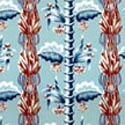
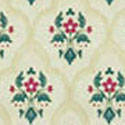
Click on a sample to bring up a full page of wallpaper |
![]() |
A Cheap Substitute The first wallpapers were decorations for wood panels, introduced into England by Flemish craftsmen. The papers were small squares with images printed by wood blocks, which were then colored in by hand. As the desire increased to find a less expensive alternative to the wall-hangings of the rich, printers produced simple yet decorative paper panels. In the 1500s, the wealthy continued to cover their walls but now they did so with brocades, velvets and even embossed leather. The earliest known wallpaper in England dates back to 1509 — an Italian-inspired woodcut pomegranate design printed on the back of a proclamation issued by Henry VIII. Discovered in 1911 at Christ’s College in Cambridge, the paper is attributed to Hugo Goes, a York printer. In general, wallpaper of this period depicted floral designs and murals. Wallpaper’s popularity increased in Elizabethan England. Throughout Europe, a fascination began with these fine papers that offered protection against dampness and an improved ability to handle fireplace smoke. Read More
During the US Civil War in 1863, J.M Swords tore wallpaper from the walls of his own home on which to print his Daily Citizen newspaper and get news to his fellow Confederate citizens. The tradition
of wall decoration dates back to Egyptian and Roman wall painting.
Centuries later, and particularly in cooler climates, people used
fabric to cover walls and windows to keep drafts out. In the homes
of the well-to-do, these fabrics were elaborate, resplendent tapestries,
which also adorned the walls of European palaces and castles. They
were not only practical, but decorative.
A Period Of Innovation The 1600s introduced a period of French innovation leading to wide acceptance of wallpaper. Writer Savary des Bruslons noted “a dominotier makes a type of tapestry on paper . . . which is used by the poorer classes in Paris to cover the walls of their huts or their shops.” Such dominotiers gained the reputation of experts in emulating fabric on paper. Papers of this period fell into two classes, irrespective of whether they were produced in England or France: simple and complicated. The simple typically depicted a geometric pattern repeat, printed from a single wood block. The complicated consisted of more complex designs, including shields, vases or flowers and were created from several blocks. Either way, designs were first printed in black onto the paper. Using a kind of stencil, color was applied. The less expensive papers were printed less carefully from worn blocks and sold at rural fairs. The more costly papers were produced from carefully carved, new wooden blocks and were printed and colored carefully as well. The 1600s also marked the debut of flock paper.Flock is the small shearing of wool left over from the manufacture of cloth. The process involved painting the background color onto paper or canvas, printing or stenciling the design onto it with a slow-drying adhesive, and scattering the flock over the adhesive, producing a velvet-like pile over the chosen design. The practice began about 1600 but enjoyed its heyday from 1715-45 when exceptional quality paper of this type was imported from France into England. Though called
wallpaper, the paper was not attached directly to the wall during
this period. Instead, it was pasted onto linen and the linen was then
attached to the walls with copper tacks. Sometimes the linen was attached
to wooden battens, which were then attached to the walls. Read more
|
|
![]() |
||
![]() |
||
![]() |
||
![]() |
||
![]() |
||
![]() |
||
![]() |
||
![]() |
||
![]() |
||
|
Have you ever wanted to have your own web site? You don't have to be a ''techie type person'' to use Homestead Site Builder. Homestead takes care of ALL the complicated stuff. If you do happen to get stuck, and need help, you can phone or email the Homestead support staff, they are really pleasant and helpful. You can try it out yourself for FREE! Just click the the Homestead button below. Build a Website in Minutes. Try for free! |
|
Links To Historical Wallpaper Web Sites Adelphi Paper Hangings Producer of historically accurate block printed wallpapers
for museums and historic institutions, as well as for period designers
and those involved in contemporary design projects. The Arts & Crafts Home The Arts and Crafts Home have assembled a range of authentic
arts and crafts period design wallpapers using the designs of the finest
architects and designers of the period. Color My World By the beginning of the 1700s, simple black and white
papers had virtually disappeared in Europe. Colored papers were in vogue,
especially imported paper from China. In France, wallpapers evolved
from the end papers used in bookbinding. The first ones were printed
in small squares in marbleized patterns. Eventually, the squares were
glued together into a long sheet and rolled up for convenience A Short History of Wallpaper During the medieval period, tapestries, hand-woven carpets characterised by pictorial designs, were brought to Europe by Arabs. They were successful and in few years tapestries were decorating all European courts. In a certain way, they are the most direct forerunners of wallpapers |
||